

Should Not Use - Toshi Yoshida
The bombing of Hiroshima showed the world how dangerous a weapon atomic bombs are. Following World War II, anti-nuclear stances grew and remained strong internationally and particularly in Japan, where the first atomic bombings happened, changing the trajectory of the lives of those in Hiroshima forever.
In this woodblock print, Yoshida Toshi depicts a devastating scene the use of an atomic bomb. This work is starkly different from Yoshida Toshi's usual subjects of animals and landscapes. The explosion is heavily detailed, the impact of the bomb radiates outwards, forming the iconic mushroom shape associated with the atomic bomb. Combined with the sharp and resolute title "Should Not Use", Yoshida Toshi sends a clear message protesting the further testing and future use of the atomic bomb.
The use of the bomb has also sparked resistance from artists around the world, prompting them to create works that protest against the use of nuclear weapons.
In June 1982, in response to the significant nuclear arms race in the United States, the largest anti-nuclear demonstration in the US took place. Keith Haring created the “Poster for Nuclear Disarmament” for this event, distributing 20,000 copies in Central Park to advocate for disarmament. Throughout his life, Haring continued exploring various mediums and methods to deliver his messages, focusing on themes of peace and freedom.
In 1988, Haring was involved with the ‘HIROSHIMA ’88′ charity concert for the construction of an atomic bomb victims’ home. His visit to Hiroshima, the first city to suffer an atomic bombing, deeply moved him. Visiting the Hiroshima Peace Memorial Museum, he wrote in his journal: “Who could ever want this to happen again?
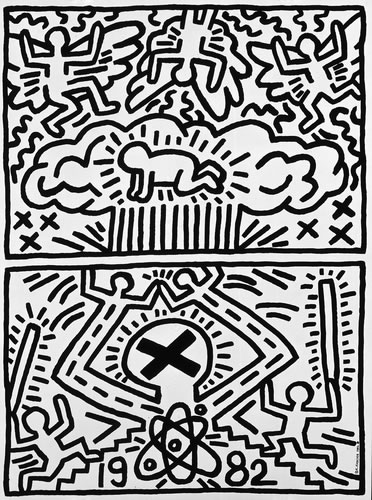
Keith Haring
Poster for Nuclear Disarmament
1982
Jim Dine's Hiroshima series consists of 11 works which support anti-nuclear protests following the atomic bombing by the US on Japan. Through strong and bold marks, the subjects evoke the annihilation and despair unleashed by the atomic bombs the United States dropped in 1945 on Hiroshima and Nagasaki, Japan, at the end of World War II. The title, Hiroshima, transforms Dine’s familiar symbols into metaphors for the tragedy of weapons of mass destruction, showing the violence of war and its inevitable toll on innocent civilians.
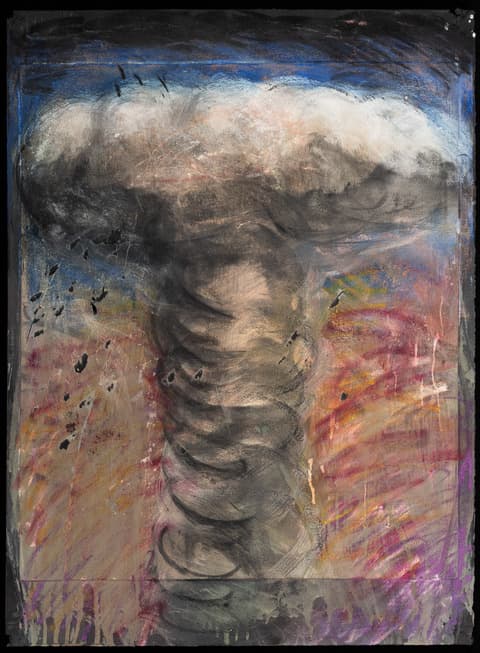
Jim Dine
Hiroshima
1982-83
The Campaign for Nuclear Disarmament (CND) symbol has evolved into being associated with calling for peace worldwide. In addition to its original meaning to rid the world of nuclear weapons, it is now also used as an anti-war symbol.
Banksy’s CND Soldiers first appeared during the 2003 anti-war protests in London. The work depicts two armed soldiers, one standing guard while the other paints a red CND peace symbol, the only coloured subject in the piece. The juxtaposition of an emblem of peace and anti-nuclear protest being created by the very agents of organised violence, questions the military’s role in “keeping the peace”.
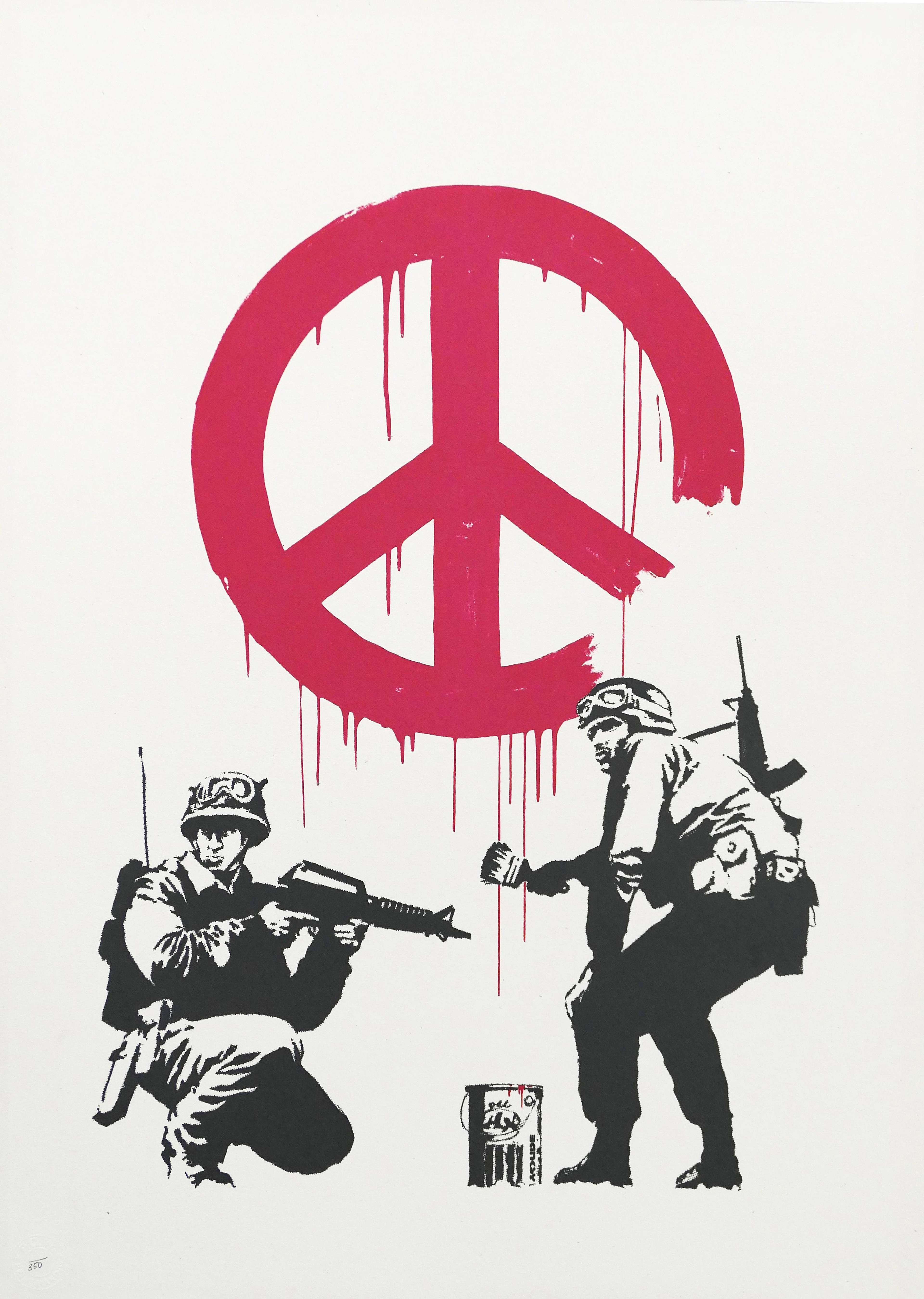 Banksy
CND Soldiers
2005